enLanguage

Connector

Wholesale Connector Manufacturer


Goowell Electrical Co., Ltd is a leading manufacturer of connecting cables, mobile phone data cables, and Apple MFi-certified USB data cables. Our products include iPhone MFi Data Cable, Data Cable, Radio Control, Models Connecting Wire, Wiring Harness, Connecting Cable, UL Wire, Connector.


Why Choose Us
 

Wide Range of Applications
The company’s products are suitable for all types of electrical devices, including home appliances, medical equipment, new energy vehicles, and 3C-type digital products.


Advanced Equipment
The company has invested in state-of-the-art production equipment, including automatic terminal machines, soldering machines, and injection machines. The automatic terminal machines used by Goowell Electrical are designed for high-speed and efficient production of cables and wiring harnesses.


High Productivity
With its 8 production lines, around 200 workers, and a 20-person R&D team, the company is well-equipped to meet the demands of its customers and provide them with the latest and most advanced products on the market.


Leading Service
The company’s commitment to customer satisfaction is reflected in its comprehensive range of services, including 7/24 support before order, 100% inspection during production, and quality assurance for 1 year.


Definition of Connecting Cable


Connectors are parts or devices used for electrically connecting or disconnecting circuits etc. They can connect and disconnect by hands or with simple tools without requiring special tools or processes such as soldering.
Although there are various types of connectors, the large majority are one-piece types that are used alone or two-piece types consisting of a plug and socket. One-piece types directly connect printed circuit boards and wires to connectors.


Amphenol Conector


What are Advantages of Connector?

Improve the Production Process

The connector simplifies the assembly process of electronic products. It also simplifies the mass production process;


Easy to Repair

If an electronic component fails, the failed component can be quickly replaced when an electrical connector is installed;


Easy to Upgrade

With the advancement of technology, components can be updated when electrical connectors are installed, and new and more complete components can be used to replace the old ones;


Improve Design Flexibility

The use of electrical connectors allows engineers to have greater flexibility when designing and integrating new products and when composing systems with components.


Common Types of Connector

Keyed Connectors

These Connectors can be joined together when they are adequately aligned together. This property helps avoid accidental damage to the terminal pins of the Connectors.

ESD Shielded Connectors

The ESD Connectors have protection from electrostatic discharge, which can damage the circuit of its components.

Locked Connectors

These Connectors have an inbuilt locking mechanism which helps to keep the connection in place.

EMI Filtering

These Connectors have an additional feature that is mounted on the housing. This feature helps the Connector to shield itself from electromagnetic interference.

Water-Resistant Connectors

Water can damage Connectors very easily. Hence these Connectors are made water-resistant.

Hermetically Sealed Connectors

These Connectors can be used underwater. It will not get damaged by the water pressure.

Moisture/Oil Resistant Connectors

These Connectors are specifically made to protect them from oil and moisture.

XT60 Plug


Applications of Connector
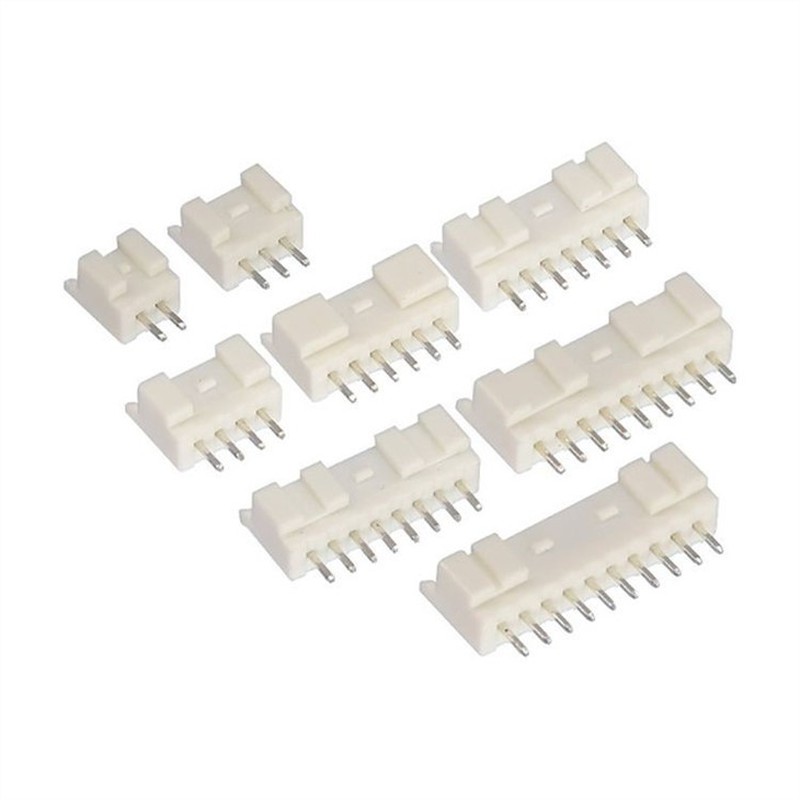
JST Connector
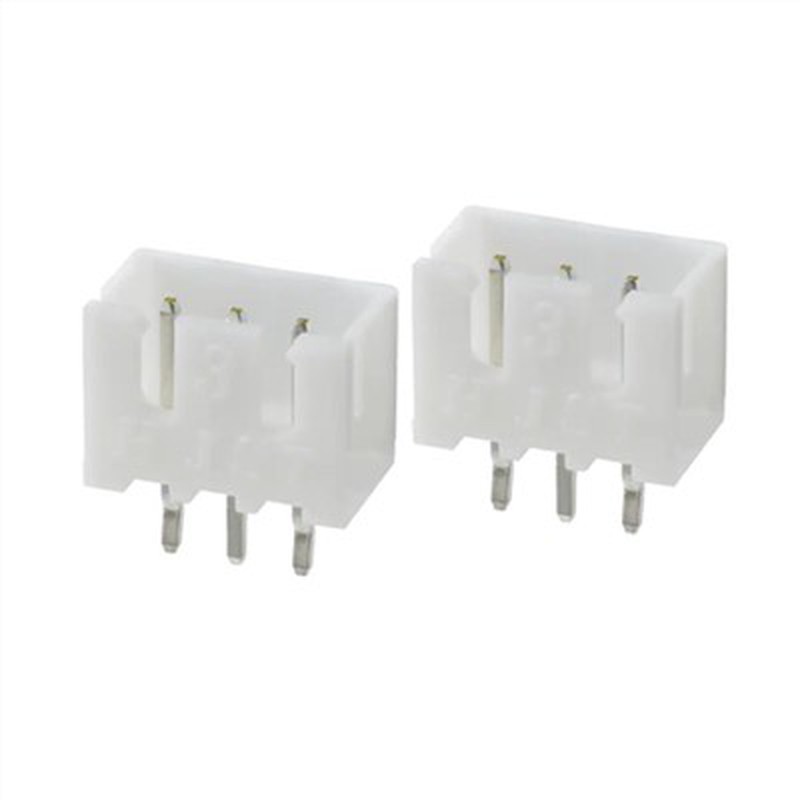
JST Connector
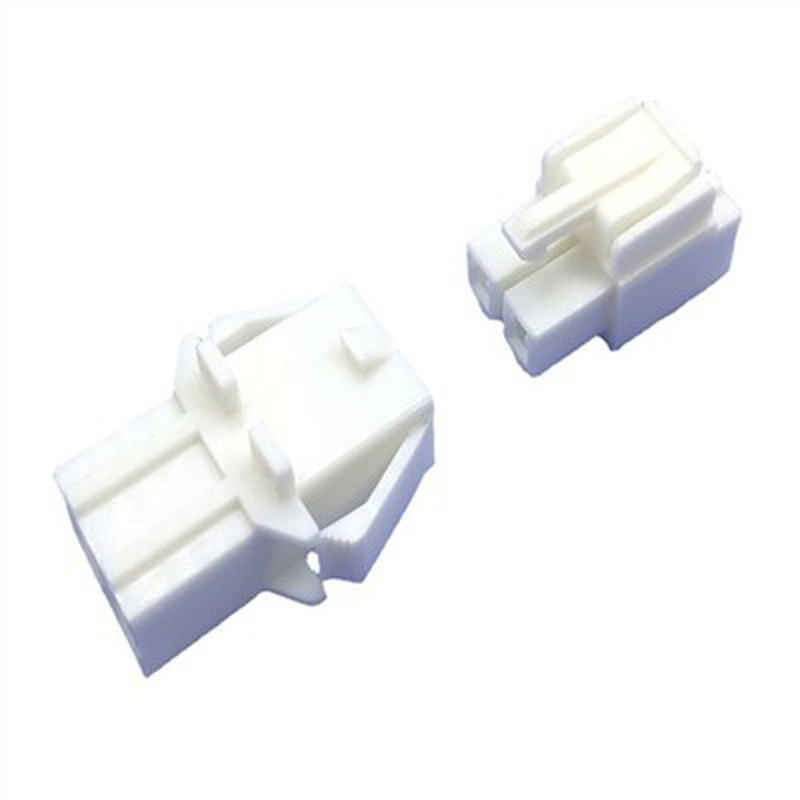
Molex Connector
JST Connector

Automotive Industry

Reliable electrical connectors are critical in vehicles, connecting various electrical systems such as engine control units, sensors, and communication networks. The automotive industry demands connectors with robust environmental resistance, preventing failures caused by temperature fluctuations, vibrations, and exposure to chemicals.


Aerospace Industry

In the aerospace sector, reliable connectors are vital for the safe and uninterrupted operation of mission-critical equipment and systems. Connectors used in aerospace applications must meet stringent standards for durability, electrical performance, and resistance to extreme temperatures, shock, and vibration.


Telecommunications Industry

With the increasing demand for faster and more reliable communication networks, dependable electrical connectors are crucial in the telecommunications industry. Connectors used in fiber optic cables and high-speed data transmission must offer low insertion loss, high bandwidth, and strong mechanical stability to ensure efficient data transfer and network performance.


Industrial Applications

In industrial settings, reliable electrical connectors play a fundamental role in powering and controlling machinery and equipment. Connectors used in industrial applications must withstand heavy-duty operations, while ensuring secure and stable connections to prevent downtime and optimize productivity.


Components of Connector


Shell

The electrical connector shell refers to the housing, nut, and tail attachment of the plug and socket. The role of the shell is to protect the internal parts of the insulators and contact bodies from damage. The positioning keyway is for the plug and the socket, and the nuts are used to connect and disconnect the socket. The tail attachment is used to protect the connection point of the wire and the contact body from damage and also used to fix the cable.

The shell also has a certain electromagnetic shielding effect. It is generally made of aluminum alloy through machining, cold extrusion, die casting. Steel shells are mostly used for glass sealing and high-temperature resistant electrical connectors.


Insulator

The insulator consists of a pin insulator, jack insulator, interface seal body, and line seal body, etc. It is used to keep the pin and jack at the set position and create electrical insulation among each contact body and between the contact body and the shell. The interface seal body and line seal body are added to the insulator to improve the environmental resistance of the electrical connector.

In order to achieve high-temperature and low-temperature resistance, flame retardancy, and ensure the stability of the geometric dimensions of parts, most insulators are molded from thermoset plastic, and the interface seal body and the line seal body are molded from silicone rubber.


Contact Body

The contact body includes a male contact piece and a female contact piece sometimes called a pin and a jack. And the connection methods are divided into the welding type, the crimping type, the press-in type, and the winding type, etc., to realize circuit connection.

The pin and the jack are the key component of the electrical connector, which directly affects reliability. Most of the pin and jack are machined from elastic copper alloy materials with good conductivity, and the surface is silver-plated or gold-plated to achieve low contact resistance and anti-corrosion. Generally, there are slotted jack, wire spring jack, crown spring jack, and punched jack.


Adapter Cable


What are the Common Electrical Connector Materials?

Brass

Brass is the cheapest metal you can use in terms of weight. Generally, the zinc content in brass can range between 5% to 40% based on the application. Brass offers considerable strength, good spring and adequate electrical properties.

Brass connectors are mainly used for KK terminals.

Phosphor Bronze

Phosphor bronze is tough and offers increased strength compared to brass. It comes with impressive conductibility and superior fatigue resistance. Phosphor bronze also has excellent elasticity making it suitable for use in electrical contact springs.

Beryllium Copper

Beryllium copper is the best type of copper alloy for spring terminals. It contains around 0.5% to 3% beryllium with other elements. The alloy offers high strength and is cheaper than phosphor bronze.

High Copper Alloy

High copper alloys contain a high percentage of copper (more than 96%) and are suitable for demanding applications. The alloys have high strength coupled with excellent thermal and electrical properties. You can also use them in high-temperature settings as they don’t soften easily.


How Do You Maintain Connector?

Regular Inspections

Regularly inspect your connector for signs of damage or wear, such as cracks or breaks in the housing. Ensure all contacts are secure and undamaged Check to see if the over-molding is working to protect your connection system as it was intended (e.g. water resistant).


Cleaning

Establish a cleaning schedule to remove any accumulated dirt, dust, or debris is important. Use a soft-bristled brush or a lint-free cloth for this purpose, and avoid using abrasive cleaners or solvents that could potentially harm the connector.


Protection

Protect your connector from moisture and other environmental elements that could cause corrosion or damage. When not in use, store your connector in a dry, cool place and use protective caps.
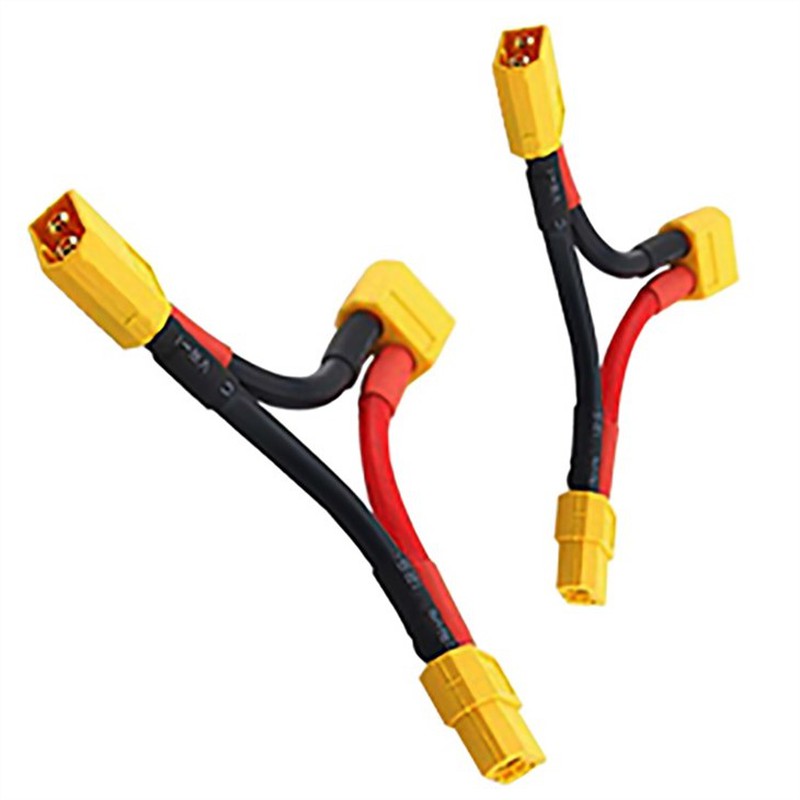
Adapter Cable


The Considerations for Buying


Environmental Protection

Depending on your electrical project, the connection may require additional environmental protection from external factors. For example, harsh environments can expose connectors to extreme weather. So, it is important to look for electrical connectors that can create the type of seal you need for your circuit. 

Whether you are looking for weatherproof, waterproof, or UV resilient, these considerations will influence the choice of your connectors. Typically, heat shrink wire connectors and heat shrink connector kits are preferred for their environmental protection features, keeping rain, wind, and more at bay. 


Durability

Electrical connectors must be resistant. If they are part of a permanent circuit, they need to be able to remain in place even when exposed to some tugging, stretching, or any other external pressure. 

Here again, the focus is on working with electrical connectors that can guarantee a tight and secure connection designed for long-term usage. This is where heat shrink connectors can elevate your installation. 


Ease of Installation

Essentially, electrical connectors need to be easy to use. The last thing you need during an electrical project is to waste precious time and effort establishing a connection between two different electrical parts. You want to be able to set up a quick connection without needing cable ties to hold your installation. 


Our Factory


The large workforce at Goowell Electrical allows the company to efficiently manage its production processes and meet customer demands. The experienced workers are trained to use the latest technology and equipment to produce high-quality products that meet the strictest standards for quality and reliability.

productcate-1-1
productcate-1-1


Our Service


The company’s 7/24 support before ordering ensures that customers receive the information and assistance they need to make informed purchasing decisions.

Whether you have questions about product specifications or need help with an order, Goowell Electrical’s customer service team is available to provide support and answer any questions you may have.

The company’s 100% inspection during production ensures that each and every product is thoroughly tested and inspected before it is shipped to customers.

Goowell Electrical also provides quality assurance for 1 year, giving customers the peace of mind that comes from knowing that their products are backed by a commitment to quality and reliability.


Our Certificate


The company has obtained a number of certifications that demonstrate its commitment to excellence, including ISO 9001, Apple MFi, High-Tech Enterprise, UL/CE/FCC/ROHS, and others.

productcate-1-1
productcate-1-1
productcate-1-1
productcate-1-1


Contact Us


write to us
Email: gwkathy@shusb.com
visiting us
Address: 5th floor, Building 1, Shajing Industrial Park, Haoxiang Road, Shajing, Baoan District, Shenzhen
Contact directly
Tel: +86-755-27086770
Mob: +8613826575395


Frequently Asked Questions


Q: What are Application of Connectors?

A: As we have seen, there are a lot of Connector types. Because there are so many different types of Connectors, they tend to have unique roles. We will now see some unique applications of Connectors.
You can find Connectors on every computer and laptop.
We are all aware of the Universal Serial Bus, also known as USB, which is also a standard Connector.
Connectors are also used as radio frequency Connectors. These Connectors help prevent the change of the transmission line’s impedance.
The Connectors named eight positions/ eight conductors (8P8C) are used in ethernet cables and CAT5. They look like RJ45 cables but the socket of 8P8C is different from RJ45.
D-Subminiature is the Connectors used in modem ports and IBM-compatible computers. There are different types of D-subminiature Connectors. These are thermocouple contact options, PCB and crimp mounts, solid machined contacts, etc.
The DC Connectors and AC power sockets/ plugs are installed to prevent people from getting shocked when they come in contact with energized conductors. 

Q: What are the connection methods of electrical connector?

A: Welding
The most common type of welding is tin soldering, and the most important thing for it is the continuity between the solder material and the soldered surface. Therefore, for electrical connectors, solderability is important.
Tin alloys, silver, and gold are the most common coatings on the soldering end of connectors. The reed contact pair has a welding end of solder tab, punching solder tab, and notched solder tab type, while the pinhole contact has a drilled arc notch type for the common welding end.
Crimping
Crimping is a technique to connect wires to contact pairs for compressing and displacing metal within the limits. Good crimping can produce intermetallic fusion flow so that the wires and contacts material deform symmetrically. This kind of connection is similar to a cold welding connection, which can get better mechanical strength and electrical continuity, and can withstand more severe environmental conditions.
At present, it is generally believed that crimping is better than soldering, especially on high-current occasions. Special crimping tools or automatic or semi-automatic crimping machines must be used in crimping. And the wire barrel should be selected correctly according to the cross-section of the wire. It should be noted that crimping is a permanent connection and can only be used once.
Winding
Winding is to wind the wire directly on the winding post of the angular contact. The wire is wound under the tension, and pressed into and fixed at the corners of the winding post to form an airtight contact. There are several requirements for wire winding.
the nominal value of the wire diameter should be in the range of 0.25mm -1.0mm;
when the wire diameter ≤ 0.5mm, the elongation of the conductor material is ≥ 15%;
when the wire diameter is > 0.5mm, the elongation of the conductor material is ≥ 20%.
Tools for winding include wire wrap tools and fixed winding machines.
Puncture Connection
Puncture connection, also known as insulation displacement connection(IDC), is a novel end technology invented in the United States in the 1960s with high reliability, low cost, and ease of use. It has been widely used in various electrical connectors for printed boards and is suitable for the connection of ribbon cables.
It is not necessary to strip the insulation layer of the cable during the connection, instead, penetrate the tip of the U-shaped contact spring of the connector into the insulation layer to make the cable conductor slide into the groove of the contact spring and be clamped so that a tight electrical connection is formed between them. It requires only simple tools but must use cables with a specified wire gauge.

Q: What are different types of connectors?

A: Box-to-box or input/output.
Wire-to-board.
Chip-to-package.
Package-to-board.
PC board-to-board.

Q: What types of electrical connectors are there?

A: Audio and Video Connectors 
Audio connectors are used to affix cables to other audio equipment, providing electronic signal transference and grounding protection. Applications for audio connectors can be general purpose, telephone, or microphone. Most audio connectors are for commercial purposes, but some may conform to military specifications.
Automotive Electrical Connectors
Automotive electrical connectors are designed to be used specifically in vehicles. 
Board Mount Connectors
Board Mounted Connectors, or Circuit Board Connectors, are connectors that can be used as components embedded on a computer board. 
Board to Board Connectors
Board mount connectors or circuit board connectors are connectors that can be used as components embedded on a computer board. The boards can be customized to meet the user application.
Centronics Connectors
Centronics connectors are standard parallel interface devices for connecting printers and other peripherals such as portable disc drives, tape backup drives, and CD-ROM players to computers. Centronics connectors are named after the printer that first used them and include two rows of flat contacts.
Circular Connectors 
Circular connectors are multi-pin connectors primarily used for external interfacing. They can be used for data transfer, electrical signal transmissions, or for powering electrical devices. In some cases, circular connectors have been designed to carry what may be referred to as a mixed signal and may be described as a power and control connector. These types of multi-pin connectors are used for both power and signal transmissions.
Coaxial Connectors 
Coaxial connectors are composed of an insulated central conducting wire wrapped in another cylindrical conductor (the shield). The cable is usually wrapped in another insulating layer and an outer protective layer. Coaxial cables and connectors have the capacity to carry vast quantities of information. They are typically used in high-speed data and CATV applications. 
DIN Connectors
DIN connectors are high frequency, multi-pin, electrical connectors that meet standards established by Deutsches Institut für Normung (DIN), a German national organization for standardization. The ends of DIN connectors are round, notched, and protected by a metal skirt to ensure that pins line up correctly. 
D-Subminiature Connectors
D-subminiature or D-sub connectors are sturdy electrical connectors with a mating face shaped like the letter D. They provide polarization because male and female connectors can fit together in only one way. 
Edge Connectors 
Card edge connectors (also called edge card connectors) are embedded devices that mate with the edges of single-sided or double-sided printed circuit boards (PCBs) in order to provide an external electrical connection. Industry standards define power specifications such as voltage levels, power pin placements, and power requirements. For example, PICMG 1.0/1.2 standards define the power specifications for peripheral component interconnect (PCI) and industry standard architecture (ISA) buses.
Fiber Channel Connectors
Fiber Channel connectors are high-speed connectors used in Fiber Channel systems. 
Gender Changers
Gender changers are devices that change the end of a cable into another type, allowing two cable assemblies with the same or different genders to mate. 
Heavy Duty Rectangular Connectors
Heavy duty rectangular connectors are designed to accommodate large electrical loads and direct signals under a multitude of operating conditions. They are normally used in industrial applications where the delivery of high power is required. For this reason special terminations such as solder cup, wire wrap, and other heavy duty terminals, are used to secure the safe delivery of power. 
IC Interconnect Components
IC interconnect interface or connect microelectronic semiconductor chips to printed circuit boards (PCB) or larger-scale devices. An electronic interconnect device bridges a gap between two conductors and allows the flow of current or light waves from one to the other. Electronic packaging consists of a plastic, ceramic, or metal enclosure that houses an integrated circuit (IC) on a silicon or metal die.
Instrument and Computer Power Connectors
Instrument power connectors and computer (disk drive) power connectors are used to connect a computer’s power supply to a hard disk, floppy disk, compact disk (CD), digital video disk (DVD), or other type of disk drive. They are also used with removable media drives such as Zip disks, and computer cooling devices such as fans and electro-thermal coolers.
Medical Electronic Connectors
Medical electronics connectors are used with medical devices and medical equipment in hospitals, clinics, doctors' offices, and other health-care facilities. 
Micro Connectors and Nano Connectors
Micro connectors and nano connectors exhibit contact pitches of 0.05” (micro) and 0.025” (nano), respectively. They have one or more rows of plated contacts and are either straight or right-angled. Some micro connectors and nano connectors are circular or cylindrical. Others are designed for coaxial cables or RF and microwave applications. Both male and female devices are available. Micro connectors and nano connectors are used in a variety of industries and applications.
Military (MIL-SPEC) Connectors
Military (MIL-SPEC) connectors are shell-type connectors that are built in accordance with military specifications. Their design takes into account the need to protect the connection from environmental factors, allowing them to be used in military and aerospace applications. The type AN (Army-Navy) connector set the standard for modern day connectors. They are often referred to as Military Standard, "MIL-STD", or "MIL-SPEC" connectors.
Modular Connectors and RJ Connectors
Modular connectors and RJ connectors include two similar, yet distinct styles of connectors. Modular connectors are made of "plug-in units" that can be added together to make the system larger, improve the capabilities, or expand its size. Registered Jack (RJ) is a telephone and data jack application specific connector registered with the FCC. 
Panel Interface Connectors
Panel interface connectors (PICs) are devices installed in the outside of a panel that houses a PLC, a computer, or other devices. The PIC allows the user to interface the PLC or the computer without opening the panel door avoiding potential safety hazards. Power receptacles and communication ports can be placed in a number of combinations to produce various customizable products. 
PC Card Connectors
PC card connectors are used to connect PC cards, CompactFlash cards, and other devices to computers. The PC card form factor is defined and maintained by the Personal Computer Memory Card International Association (PCMCIA), a U.S. computer industry trade organization. Known originally as PCMCIA, or PCMCIA cards, PC cards were designed for computer storage expansion. They are now used as network cards, modems, and even hard disks.
Phone Jacks and Plugs
Phone jacks and plugs are connectors used with telephones. They are also known as modular jacks (female) and modular plugs (male). 
RF and Microwave Connectors
Radio frequency (RF) and microwave connectors are used to connect the ends of cables in systems that operate in the radio frequency or microwave spectrum. Microwave refers to electromagnetic energy with a frequency higher than 1 gigahertz and a wavelength shorter than 30 centimeters. Radio frequency refers to alternating current that generates an electromagnetic field suitable for wireless broadcasting and/or communications if the current is input to an antenna. An RF connector can be found in transmission systems and allows for the coupling or uncoupling of system components. A mated pair consists of a plug and a jack.
Solar Connectors
Solar connectors facilitate electrical connectivity in solar energy systems. Numerous versions of connectors or standard non-connector junction boxes are employed in the solar industry and are the primary characteristic elements of solar modules. 
Solenoid Valve Connectors 
Solenoid valve connectors are used to connect solenoid valves and pressure switches. Solenoid valve connectors are often used as environmentally resistant junction boxes. These protective enclosures can be used with either hydraulic or pneumatic solenoid valves or pressure switches. Specific devices are capable of working with either AC or DC voltages, although some types can handle both.
Terminal Blocks
Terminal blocks are modular, insulated blocks that secure two or more wires together. Terminal blocks are used to secure and/or terminate wires and, in their simplest form, consist of several individual terminals arranged in a long strip. Terminals are useful for connecting wiring to a ground or, in the case of electrical power, for connecting electrical switches and outlets to the mains. 

Q: What types of plug connectors are there?

A: AC Power Plugs: These are used to connect devices to the electrical power grid. They typically have prongs that fit into wall outlets or other power receptacles.
DC Power Plugs: These are used to connect devices to DC power sources, such as batteries or power supplies. They typically have a cylindrical or barrel-shaped design with a male plug and a female receptacle.
Audio Connectors: These are used to transmit audio signals, such as those for headphones, microphones, speakers, or audio equipment. Examples include 3.5mm (1/8-inch) audio jacks, XLR connectors, and RCA connectors.
Ethernet Connectors: These are used for data communication in computer networks and are commonly used for connecting Ethernet cables to networking devices, such as routers, switches, and network cards. Examples include RJ-45 connectors.
USB Connectors: These are used for connecting USB (Universal Serial Bus) devices, such as smartphones, computers, printers, and other peripheral devices. Examples include USB Type-A, USB Type-B, and USB Type-C connectors.
HDMI Connectors: These are used for high-definition video and audio transmission, commonly used in audio/video equipment, such as TVs, monitors, projectors, and gaming consoles. Examples include HDMI Type-A, HDMI Type-C (mini HDMI), and HDMI Type-D (micro HDMI) connectors.
Coaxial Connectors: These are used for transmitting RF (radio frequency) signals, commonly used in television, cable, and satellite systems. Examples include F-type connectors and BNC connectors.
D-sub Connectors: These are used for data communication and often used in computer systems and industrial applications. Examples include DB9, DB15, and DB25 connectors.

Q: What does an electrical connector consist of?

A: There are two main components to an electrical connector, namely the housing part and the terminal block. 
Terminal blocks refer to the part of the electrical connectors equipped to carry the electric current. This part is made out of a conducting material, typically metal. 
The housing is the part of the connector you can touch without risking an electrical shock. It is made of insulating material and designed not to conduct any current. The housing is typically the visible part of the electrical connector and is designed to be sturdy and stable to protect the connection. 

Q: What are the advantages of direct plug-in electrical connector?

A: Ease of use: Push-in connectors are incredibly easy to use, making them ideal for both professional electricians and DIY enthusiasts. With their simple design, you can insert stripped wires directly into the connector without the need for any additional tools or twisting of wires. This saves precious time during installations.
Time-saving: With traditional wiring methods, electricians often spend a significant amount of time twisting wires together and securing them with wire nuts. Push-in connectors eliminate this step, allowing for quicker installations and reducing labor costs.
Versatility: Push-in connectors can accommodate a wide range of wire sizes and types, including solid and stranded wires. This versatility ensures that you can use these connectors for various applications, making them a convenient choice for different projects.
Reliability: These connectors provide a secure and reliable electrical connection. The spring mechanism within the connector holds the wire firmly in place, minimizing the risk of loose connections due to vibrations or movement. This added reliability helps maintain the integrity of the electrical system.
Space-saving: Push-in connectors are compact and require minimal space, making them ideal for tight electrical boxes or spaces where traditional connectors may be challenging to fit. This advantage provides more flexibility during installations, especially in crowded electrical panels.

Q: What factors should be considered when choosing an electrical connector?

A: Environmental Factors
Consider the environment in which the connector will be used. Factors like temperature, moisture, dust, and vibration can affect the connector's performance. Selecting a connector that is resilient  and can withstand these environmental conditions is crucial to maintaining reliable and efficient system performance.
Data Transmission Requirements
The type and volume of data to be transmitted are also important considerations. Some connectors are designed for high-frequency applications, optimizing signal quality, while others may be better suited for lower-frequency applications. Choose a connector that aligns with the data transmission requirements of your specific application.
Contact Requirements
The number and type of contacts (e.g. signal, power, high frequency, etc.) required should also be taken into account. The connector should possess the appropriate number and type of contacts to support the data transmission needs of the application.
System Design and Compatibility
Consider the system design and the compatibility of the connector with other components in the system. Compatibility ensures seamless integration and reliable system performance.

Q: What is the benefit of using a joint connector?

A: Plug joint connectors can be easily connected, reused, or rewired without the need for an electrician. They are efficient for prefabricated building wiring applications, as the wires are usually installed when the wall, floor, or roof is manufactured in the factory.

Q: What are electrical connectors made of?

A: Electrical connectors are electro-mechanical devices that join electrical terminations to create an electrical circuit. Connector housings are usually made of molded plastic. Terminals are usually made of metal or other conductive materials.

Q: How do you remove pins from electrical connectors?

A: If you need to remove pins from a connector, there are a few things you'll need to do. First, find a small screwdriver that fits into the pin's slot. After that, locate the tab that holds the pin in place and gently pry it up. Once the tab is lifted, the pin should come out quickly.

Q: What are the essential features of connectors?

A: Some of the basic features for a good connector are reliability and low cost, high return and low insertion losses, easy to operate and install and low sensitivity for environmental conditions. These connectors also help in quicker disconnection and connection and align at the cores to allow light to pass through it.

Q: What factors should be considered when purchasing an electrical connector?

A: Cost
Cost is usually an important consideration for many engineers and manufacturers. After all, you want to have the best at the lowest price possible, right?
Even that is your goal, don’t make the mistake of choosing your connectors based on the only cost. You may end up with cheap products which don’t do their job and lead to the failure of your project.
So always look for quality and try to strike a balance with cost to enjoy the maximum cost-effectiveness.
Electrical connector–Environment
The environment where you will use the connectors is also crucial. Will the connectors be used on bare ground or in the water? Or in a boat? Will the connectors encounter extreme weather? Will the project involve vibrations and shocks?
Select the best connectors based on your use environment. You should go for connectors with environmental sealing if you need protection against dust, vapor, liquids or combustible gases.
Determine the level of safety you require and then choose the connectors. Also, keep the operating temperature range in mind while making your selection.
Signal Type
You will need to choose the connectors based on the signal they transmit. Signals can be analog, digital, or a combination of both. If the signal is analog, then what is the frequency? Does it involve audio or RF? What is the bit rate or clock speed for analog signals?
The type of signal decides the type of connector, pinout, and wiring you will need.
Remember that you cannot use certain signal combinations in the same connector. You will need to consider clearance distances and creepage for high-voltage pins. You can also go for a custom solution based on your unique needs and design specifications.
Power Level
The level of current passing through your connector will also influence your choice. For high current paths, you will need multiple larger and thicker pins. If you are dealing with high voltage, then go for a connector with more insulation. For high voltage pins, you may also need to consider clearance distances and creepage.
Ruggedness
The frequency of your terminals determines the strength of the connectors you need. Will the terminal be often plugged in and plugged out? Choose a connector with appropriate ruggedness based on your application.

We're well-known as one of the leading connector manufacturers in China. If you're going to buy or wholesale high quality connector for sale, welcome to get quotation and free sample from our factory. Also, customized service is available.

Customized 2mm Pitch Female Connector, 2mm Pitch Female Connector

(0/10)

clearall