enLanguage

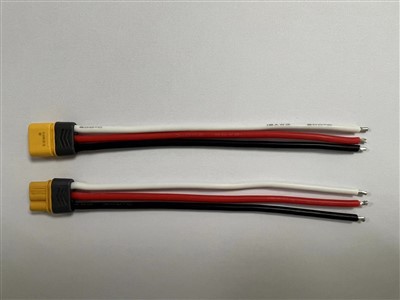
Radio Control Models Connecting Wire

Wholesale Radio Control Models Connecting Wire Manufacturer


Goowell Electrical Co., Ltd is a leading manufacturer of connecting cables, mobile phone data cables, and Apple MFi-certified USB data cables. Our products include iPhone MFi Data Cable, Data Cable, Radio Control, Models Connecting Wire, Wiring Harness, Connecting Cable, UL Wire, Connector.


Why Choose Us
 

Wide Range of Applications
The company’s products are suitable for all types of electrical devices, including home appliances, medical equipment, new energy vehicles, and 3C-type digital products.


Advanced Equipment
The company has invested in state-of-the-art production equipment, including automatic terminal machines, soldering machines, and injection machines. The automatic terminal machines used by Goowell Electrical are designed for high-speed and efficient production of cables and wiring harnesses.


High Productivity
With its 8 production lines, around 200 workers, and a 20-person R&D team, the company is well-equipped to meet the demands of its customers and provide them with the latest and most advanced products on the market.


Leading Service
The company’s commitment to customer satisfaction is reflected in its comprehensive range of services, including 7/24 support before order, 100% inspection during production, and quality assurance for 1 year.

 

First 123 Last

Definition of Radio Control Models Connecting Wire


A cable connector is a component attached at the end part of the cable that allows you to connect the cable with any port. The cable connectors are further categorized in the male and female genders. The male cable connectors have either one or numerous exposed pins.


What are Advantages of Radio Control Models Connecting Wire?
IC3 Cable
MR30 Connecting Cable
1.25 8Pin Twisted Cable
JST Female Cable L=10CM

Protective Barrier
The circular cable connectors provide the protective barrier for the cable connections. When there are two open ends of the cables, it causes the data or power loss. In the industrial scenario, it is important to minimize data loss by any means. The data or power loss occurs when the cable connections are not proper or naked. In such cases, the circular cable connectors provide the strength and protection that any cable connection requires.

Easy Installation
Instead of manually joining the two ends of the cables, you are required to perform the easy installation of the cable connectors. With the cable connectors, you are required to put the two ends of the cable in two openings of the connector and tighten the joint. The simple and effortless procedure takes no time, and anyone can do the same without any issues. If you prefer simple and easy installation, you are advised to use the circular cable connectors. Otherwise, you can free to manually join the two ends of the cables and then solder them together for better strength.

Application
The circular cable connectors are commonly used in the power lines, telecommunication, and industrial areas. The cables may transmit signals, data, or even electricity. In such cases, the circular connectors are considered useful as they prevent transmission loss and are easy to setup. The circular cable connectors are good for industrial usage due to the materials used in them and also the strength that is required in the industrial application. When you are using the cable connectors in the industrial requirement, it should withstand the dust, water, and corrosive materials, and most of the connectors are good in withstanding the same. That is why you should prefer using the industrial-strength circular cable connections.

Specifications
You may have different needs of the cable connectors according to your requirements. Some projects require you using the different types of cable connector specifications. Fortunately, the circular cable connectors come in a variety of specifications and designs, which makes it easier for the engineers to choose the relevant design and specification.


Flexible Silicone Wire


What are Features of Radio Control Models Connecting Wire?

Improve the Production Process

The connector simplifies the assembly process of electronic products. It also simplifies the mass production process;


Easy to Maintain

If the electronic component fails, you can quickly replace the failed component after installing the connector;


Easy to Upgrade

With the advancement of technology, components can be updated when the connector is installed, and the old components can be replaced with new and more complete components;


Increase Design Flexibility

Using connectors allows engineers greater flexibility in designing and integrating new products and using components to form systems.


Common Types of Radio Control Models Connecting Wire


Coaxial Cable Connectors


When it comes to the coaxial cable connectors, they are further categorized into three different categories – BNC Connector, N-Series Coaxial Connectors, and F-Series Coaxial Connectors. When you’re opting for any coaxial cable connector, ensure you check the cable width according to your requirements. Now, let’s understand the common types of coaxial cable connectors.

N-Series Coaxial Connectors

N-Series coaxial connectors and F-Series coaxial connectors look very similar, with a few differences. The major difference is one weather-resistant pin is also present over the central conductor.

The N-Series coaxial connectors are suitable for rough use during outdoor purposes. If your requirement is regarding the backbone applications, you should opt for this connector type. For some specific requirements regarding the coaxial connectors, you can reach our company too.

F-Series Coaxial Connectors

F-Series Coaxial Connectors are used for connection purposes. While installing satellites, cable television, and home cameras, F-Series coaxial connectors are highly recommended by Telco Data.

This cable connector type has crucial components like a threaded collar, central protruding conductor, and outer jacket covered with a ferrule. You should check these components closely to ensure a solid and long-lasting connection.

BNC Connector

The BNC connector (Bayonet Neil–Concelman connector) was invented by Carl Concelman and Paul Neil. The BNC connector is very unique and different from the cable connectors mentioned above. The BNC connector is very flexible, most suitable for applications regarding frequent connection and disconnection.

The design of the BNC connector type is similar to F-Series coaxial connectors. It also comes with a central conductor and a ferrule attached to the outer jacket of the cable. One of the key features of the BNC connector is the rotating collar that allows you to connect with any coaxial cable or female connector securely.

8.0mm Male Gold Plated Connector With 10AWG Silicone Wire


Twisted Pair Cable Connectors 

Twisted pair cable connectors are used along with screened twisted pair connectors and unshielded twisted pair connectors. The twisted-pair cable connectors come with plugs and modular jacks. The design of this cable connector type is symmetrical and can be used with different types of cables. The twisted-pair cable connector has a unique shape, consisting of pins, tabs, and slots.

The modular connectors are primarily used for cable television wiring and telephone connections. They are available in different widths with configurations like four, six, and eight.

The twisted-pair cable connectors are commonly used because of their unique shape. The availability of different pins and tabs makes them suitable to use with different cables and connectors.

Fiber-Optic Cable Connectors


If your applications are related to coaxial cable connectors and twisted-pair connectors, you should opt for fiber-optic cable connectors. Around a hundred different types of fiber-optic cable connectors are available in the market. Nevertheless, some types of fiber-optic cable connectors are commonly used, like MT-RJ, FC, ST, LC, and SC connectors.

Most types of cable connectors are suitable for male connectors. The fiber-optic cable connectors are used by different methods like screw-on, bayonet, and snap-in.

This cable connector type is used for transmission purposes. You need to purchase one pair of fiber-optic cable connectors for transmission. Furthermore, the fiber-optic cable connectors are available in duplex and simplex designs. The simplex cable connector can block one fiber, whereas the duplex cable connector can terminate two fibers simultaneously.

MT-RJ Connectors

This is a duplex-style cable connector available in both male and female versions. They come with multiple bins for enhanced alignment and surround both fibers inside the polymer ferrule.

SC Connectors

SC connectors are also referred to as snap-in connectors, highly used because of exceptional performance. However, they are slightly more expensive than ST connectors. The ferrule of the SC connectors is around 2.5mm ferrule.

ST Connectors

ST connectors are also known as spring-loaded connectors having a 2.5mm symmetrical ferrule and bayonet mount. ST connectors are very popular and highly used in the applications of multimode networking systems. However, you should be very cautious while using the ST connectors.

FC Connectors

When it comes to single-mode connectors, FC cable connectors are highly recommended. The best alternative of this cable connector type is ST connectors and SC connectors. Like SC connectors, this one also comes with a 2.5mm ferrule.


What are the Connection Methods of Connectors Cable?
8.0mm Male Gold Plated Connector With 10AWG Silicone Wire
1.25 8Pin Twisted Cable
Deans Adapter
JST Female Cable L=10CM

Surface Mount Connection Methods of Connectors

Surface mount is a kind of quick connection way, the connecting part of the board end is filled with fodder tin material in advance, and the contact part is accurately placed on the line of the board end with special machine, and it is connected after high temperature.

So the connector manufacturer emphasizes that the connector of the table paste needs to be able to withstand high temperature, the connector pin and the printed board surface of the pad for plane contact, welding surface and pins are located on the same side of the printed board, according to the different installation methods can be divided into horizontal table paste, vertical table paste and straddle type, table paste.


Soldering Connection Methods of Connectors

The most important thing in the soldering connection is the continuity of the metal between the soldering material and the soldered surface. Therefore, weldability is important for the connectors produced by the connector manufacturers.

The common coatings for welding ends of electrical connectors are tin alloy, silver, and gold.Connector end side pin inserted into the PCB through hole, usually in the opposite side of the brazing pad, through welding to achieve the PCB and connector reliable connection, can be selected according to the applicable temperature manual welding, wave soldering and reflow soldering.


No Welding Pressure Type

Connector manufacturers know that press-in end pins usually have a special cross section, embedded in the coated hole of the printed board (the hole must have a coating layer, otherwise it can not conduct electricity), the joint part of the interference fit, can achieve solderless electrical connection and mechanical connection.


Elastic Connection Methods of Connectors

The contact part is of elastic structure, and the elastic terminal at the end of the contact part is separable elastic contact with the surface pad of the printed board.

Connector manufacturers found that in practical use, relying on the internal elasticity of the contactor to provide compression force, so that the contactor and the PCB pad closely fit, so as to achieve conduction connection.


IC3 Cable

Uses of Radio Control Models Connecting Wire

Data Transfer

One of the fundamental functions of connectors is to facilitate data transfer between devices. Connectors ensure smooth and fast data transmission, whether transferring files between a computer and a USB flash drive or streaming high-quality videos from a media player to a television using an HDMI cable.

Power Supply

Power connectors are responsible for power delivery to multiple compatible devices, ranging from small electronic gadgets to heavy machinery in industrial settings. These connectors can handle specific power requirements and ensure safe power delivery.

Audio and Video Transmission

Audio and video connectors are crucial for transmitting high-quality audio and video signals between devices like speakers, headphones, TVs, projectors, and gaming consoles. They ensure the accurate reproduction of audio and video content.

Mechanical Fastening

Connectors often provide mechanical fastening, securing components in place while maintaining electrical continuity. This is particularly critical in industrial and automotive applications, where vibrations and movement are common.

Signal Integrity

High-quality connectors are essential for maintaining signal integrity during data transmission. A well-designed connector ensures minimal signal loss and interference, resulting in better performance and reliability.

Networking and Internet Connectivity

Ethernet connectors, commonly found in networking equipment, enable devices to connect to local networks and the Internet. They play a primary role in allowing internet connectivity and local data sharing.

Charging and Battery Management

With the increasing reliance on portable electronic devices, connectors for charging and battery management have become indispensable. These connectors allow devices to recharge their batteries efficiently and manage power flow.


Applications of Radio Control Models Connecting Wire
 

Automation Industries
Industrial automation is on the rise since it saves time and other resources while increasing efficiency. Bulgin provides components that are used in applications such as industrial robotics, packaging plants, food processing lines, process control systems, etc.

Instrumentation & Measurement
Accurate measurement systems are critical for many industrial processes. For the measurement systems to work well, their connection to the power source as well as to other components should be secure and reliable.

Tools & Machinery
Tools and machinery in industrial environments are susceptible to extreme conditions, shocks, vibrations, etc. Thus, the connectors being used should be robust enough to withstand harsh conditions while still being reliable and durable.

Pharmaceutical Industries
Pharmaceutical industries need connectors which can be safely sterilized, are watertight, and dustproof.


Our Factory


The large workforce at Goowell Electrical allows the company to efficiently manage its production processes and meet customer demands. The experienced workers are trained to use the latest technology and equipment to produce high-quality products that meet the strictest standards for quality and reliability.

productcate-1-1
productcate-1-1


Our Service


The company’s 7/24 support before ordering ensures that customers receive the information and assistance they need to make informed purchasing decisions.

Whether you have questions about product specifications or need help with an order, Goowell Electrical’s customer service team is available to provide support and answer any questions you may have.

The company’s 100% inspection during production ensures that each and every product is thoroughly tested and inspected before it is shipped to customers.

Goowell Electrical also provides quality assurance for 1 year, giving customers the peace of mind that comes from knowing that their products are backed by a commitment to quality and reliability.


Our Certificate


The company has obtained a number of certifications that demonstrate its commitment to excellence, including ISO 9001, Apple MFi, High-Tech Enterprise, UL/CE/FCC/ROHS, and others.

productcate-1-1
productcate-1-1
productcate-1-1
productcate-1-1


Contact Us


write to us
Email: gwkathy@shusb.com
visiting us
Address: 5th floor, Building 1, Shajing Industrial Park, Haoxiang Road, Shajing, Baoan District, Shenzhen
Contact directly
Tel: +86-755-27086770
Mob: +8613826575395


Frequently Asked Questions


Q: Which are the different types of cable connectors?

A: There are three types of cable connectors: coaxial cable connectors, twisted-pair cable connectors, and fiber-optic cable connectors with the twisted pair.

Q: Which tool is used for connecting connectors with the wires?

A: The crimping tool is used for associating wires with the connectors.

Q: What is a network cable connector?

A: The network cable connector is a component used for connecting one network connection to another for quicker transmission. The network cable connectors come in male and female versions.

Q: What is Connectors cable?

A: When planning a structured network cabling system having enough of the type of cable that you will be using is obviously important, but also you need to make sure you have enough of the right types of cable connectors too. A cable connector is the component that you attach to the end of a cable so that it can plug into a port or an interface of an electronic system.
The majority of connectors are either male or female gender; the males have one or more exposed pins and the female contains holes for those male pins to insert into. Though some connectors can also be hermaphroditic which are able to connect to a similarly designed connector.
The three types of connectors used in a structured network cabling system are twisted-pair cable connectors, coaxial cable connectors and fibre-optic cable connectors with the twisted pair still being the most commonly used today.

Q: What types of Connectors cable are there?

A: Twisted-Pair Cable Connectors
Twisted-Pair cable connectors include modular jacks and plugs and are used by both unshielded twisted pair and screened twisted pair connectors. They are normally a symmetrical shape but they can also be ‘keyed’ which basically means that they consist of a unique shape with special configuration of slots, tabs or pins. Modular connectors were originally designed for telephone wiring, though now how multiple uses and come in three different widths with position configurations of four, six and eight.
Both un-shielded and screened twisted-pair cable are also regularly used with insulation displacement connectors (IDCs) when connecting to punch-down blocks, patch panels and wall-plates. When terminating these connectors the wire isn’t stripped as with screw-down connections, but instead you have to force the connector in-between two facing points or blades that then pierce the plastic insulation to make a contact with the connector.
Coaxial Cable Connectors
There are three different types of coaxial cable connectors and they are the F-Series, the N-Series and the BNC coaxial connectors. When choosing your coaxial cable connectors make sure to also take into account the width of the coax cabling that you will be using so that they fit!
F-Series Coaxial Connectors are primarily used for connecting satellite and cable television or security cameras. These connectors consist of a central protruding conductor, a ferule that is crimped onto the outer jacket of the cable and a threaded collar to ensure a solid connection.
N-Series Coaxial Connectors are very similar to the F-Series but also have a pin that is fitted over the central conductor and they are weather-proof. Therefore this type of connector is used for backbone applications as well as being suitable for use outside.
The BNC Connector is quick but secure connect and disconnect coaxial connector and is named the Bayonet Neill–Concelman connector after its type of locking mechanism and the inventors of this connector Paul Neill and Carl Concelman. The BNC connector is of a similar design to the F-series with a central conductor and ferule onto the outer shield of the cable, but also has a rotating collar that is designed to securely connect to any female connector on another coaxial cable.
Fibre-Optic Cable Connectors
If you have normally just been working with twisted pair and coaxial cable and their connectors, when you first encounter fibre-optic cable connectors you will be in for a bit of a shock as there are around 100 different types on the market. However there are only a few of these that are commonly used today and they are ST, SC, FC, MT-RJ and LC style fibre-optic cable connectors.
The majority of fiber-optic connectors are ‘male connectors’ or plugs with a protruding ferrule to hold and align the fibers ready for mating with a special adaptor or jack. The two are connected together by bayonet, screw-on or snap-in methods. To be able to transmit data you need two fibers one to send it and one to receive it and fiber-optic connectors are either simplex or duplex designs. The difference is simply how the fiber is terminated and the simplex just terminates one fiber whereas the duplex is capable of terminating two of them.
ST CONNECTORS
STs are spring-loaded connectors with a bayonet mount and cylindrical 2.5mm ferrule that is usually ceramic though can also be polymer. They are a popular choice of connector for multimode networking systems, though due to being spring-loaded it is important to ensure that they are seated properly to avoid any loss.
SC CONNECTORS
SCs are widely used snap-in connectors due to their excellent performance and only slightly higher price tag than the ST. They also have a 2.5mm ferule like the ST and the snap-in connector simply latches on with a push-pull motion.
FC CONNECTORS
FCs used to be the preferred choice of single-mode connectors though it is often now replaced by SCs or LCs. The FC connector also has a 2.5mm ferule that screws on firmly once it is properly aligned.
MT-RJ CONNECTORS
These are duplex connectors that have both male and female versions. They enclose both of the fibers within a polymer ferrule and have pins for alignment.
LC CONNECTORS
These little connectors are a highly popular choice for single-mode connectors and have a good performance. They use a smaller 1.25mm ceramic ferrule that can be easily terminated with adhesive.

Q: What types of Connectors cable are there based on physical structure?

A: On the basis of the physics and shape of the cable connectors, there are two basic types one is male, and the other one is female cable connectors. 
Male Cable Connectors
At the end of the cable, if the connector is attached that has one or more exposed pins, then it is termed the male cable connector. These male connectors would attach to the female connectors, and the current can easily pass through the cable and device. So, these male connectors create a connection between the socket and the devices. 
Female Cable Connectors
Contrary to this, the female connectors have holes that allow the male sockets to attach easily, and, in this way, they would connect the power with the device. 

Q: How Do You Connect or Change a Coaxial Connector?

A: Coaxial cables and their corresponding connectors have different uses but the fundamentals of connecting or replacing them remain much the same. Here is how to conduct this procedure:
Ensure that the cable is removed from any power sources. Electrical shocks and injuries could result from adjusting a live coaxial cable
If there is already a connector in place, remove it. It may respond to a simple twist or you may need to make use of a tool such as a construction knife or wire strippers
Prepare the coaxial cable, using a wire stripper or similar device. Make a small incision towards the end of the cable, deep enough to expose the underlying copper, and then a second cut in the outer jacket of the cable – in both cases being careful not to cut into the underlying layers. Use these cuts as leverage to peel back the jacket and then the wire braiding beneath, going back the same length as the connector
Place the connector onto the exposed length of wire
Attach the connector to the wire by applying pressure. Use a compression tool – for example, a pair of pliers – or a more specialist crimping tool. Crimping is only a modified form of compression, so the two methods are very similar. In both cases, insert the connector which has been placed over the cable into the tool and apply firm pressure. Finally, spray liquid electrical tape to any remaining exposed areas and allow this to dry.

Q: How does Connectors cable work?

A: There are always three components in network cabling. These are the two devices to be connected and the cable.
In order for the signal to get from one point to the other, pins are needed to make contact between them.
With the exception of various extension cables, the connectors usually have plugs at the ends. A basic distinction is made here between “male” and “female” characteristics.
While plugs or connectors are called “male” because of their external appearance, sockets or ports are “female”. Only when the plug is inserted into the socket, port or adapter can data be exchanged between the devices.
This results in many different standards and uses. Some connectors only transmit audio data or optical signals. Others are so-called modular connectors and are used in telecommunications.

Q: What is the difference between a connector and a cable?

A: A conductor or collection of conductors used to transport electricity or telecommunications signals from one location to another is referred to as a cable in electronic or electrical systems. Either a flexible glass or plastic fiber or a metal, such as copper or aluminum, is used to transfer power or electrical signals. There are many different types of electronics cabling, and cables are frequently incorporated into devices or made with a specific end-use in mind.
Wherever wire lines need to be connected or detached, connectors are employed. Connectors are utilized in numerous pieces of electrical equipment, just like cables. This is due to the fact that they offer a great deal of versatility. For instance, once a printed circuit board is put together, it may be swiftly and simply integrated into any device or system thanks to the connectors that are employed.
Although they seem similar and are sometimes used interchangeably, wire and cable are not the same. power cables are made of wires. Single conductor wires are often made of copper or aluminum and can be solid or stranded. In insulated sheaths, numerous conductors make up electrical cables. Although both wires and cables have insulated conductors, it is the insulated wrapping that distinguishes them. Technically speaking, many conductors with no insulation around them are considered to be one conductor, forming a wire.

Q: What are the characteristics of Connectors cable?

A: Center conductor of the cable launches into the rear female socket of the connector.
Built-in stress relief accommodates cable center conductor movement.
Cable connectors easily replaced without unsoldering.
Interchangeability of connector types for unsurpassed flexibility.
More consistent electrical performance by eliminating the solder variable on the center conductor.

Q: What is the function of Connectors cable?

A: The role of the electrical connector is very simple: It builds a bridge of communication between the blocked or isolated circuits in the circuit, so that the current can flow and the circuit can realize the predetermined function.
Electrical connectors are an indispensable part of electronic equipment. Observing along the path of current flow, you will always find one or more electrical connectors. The form and structure of electrical connectors are ever-changing. There are various types of connectors with different application objects, frequencies, power, and application environments, such as multi-wire electrical connectors.
Generally speaking, what the electrical connector is connected to is not limited to current. In today's rapid development of optoelectronics technology, the carrier of transmitting signals is light in the optical fiber system. Glass and plastic replace the wires in ordinary circuits, but light Connectors are also used in signal paths, and their functions are the same as electrical connectors.

Q: Why choose our Connectors cable?

A: Secure Connections
Our cable connectors are engineered to provide secure and reliable electrical connections. With their robust construction and design, you can trust that your wiring connections will remain intact, even in demanding environments.
Easy Installation
We understand the importance of efficiency and convenience. That's why our cable connectors are designed for easy installation. Whether you're a professional electrician or doing a bit of DIY, you'll appreciate the simplicity and user-friendly features of our connectors.
Versatility
We offer a wide range of cable connectors to cater to various applications and requirements. From small residential projects to large-scale industrial installations, our connectors are versatile enough to meet your specific needs.
Durability
Our cable connectors are built to last. We source our connectors from reputable manufacturers who prioritise quality and longevity. With our durable connectors, you can trust that your electrical connections will stand the test of time.

Q: Where are Connectors cable most commonly used?

A: 8P8C
‘Eight positions/ eight conductors’ (8P8C)- these are modular electrical connectors that come in eight positions containing all the conductors. These find applications in various uses, however, they are mostly recognized in CAT5 and Ethernet Cables. Although they mostly look like the RJ45 cables that are used for landline telephones, the socket on the side which the connector fits is different. 
D-Subminiature
This is yet another type of electrical wire connectors these are mostly found on IBM compatible computers and even in some modem ports. These are primarily used for testing, computers, and telecommunications, these also come in variants along with solid machined contacts, crimp, and PCB mounts, thermocouple contact options, and etc. 
USB
Universal Serial Bus (USB), these connectors find standard use in interface devices. These are available in different types and each type serves different purposes. However, these are most frequently used in the manufacturing of PCs. 
Power 
Power electrical wire connectors, also commonly known as AC Power Plugs/ Sockets and DC connectors, are also available in various types. The main function of these types of electrical connectors is that they prevent people from facing accidents like being shocked if they come in contact with energized electrical conductors. Included with these power connectors are safety ground connections and power conductors. Power connectors also comprise multiphase power plugs/ sockets, including NEMA connectors.
Radio Frequency 
Yet another common type of electrical conductor is the radio frequency or RF connector. As the name suggests, these are primarily used for radio frequencies and are essential for connectors that do not alternate with the transmission line’s impedance. 

Q: In which industries are Connectors cable used?

A: Industrial Applications: Never have industrial manufacturing engineers, machine builders, and control panel fabricators been under greater pressure to build reliable and robust interconnected devices. The increase in automation and applications requiring internet connectivity means more connector needs. This makes the industrial environment extremely demanding for connectors, as they are subject to mechanical, chemical, and even electrical stresses like extreme temperatures, vibration, shock, and corrosive elements. Some use cases of common industrial applications include process control systems, automotive manufacturing, industrial robotics, semiconductor manufacturing, and food & beverage processing, among others.
Some of the recommended connectors for industrial applications include Pin and Sleeve, Modular, Circular, M12, M8, Ethernet, USB, and D-sub.
 
Military Applications: Connectors built for military applications are expected to withstand high-impact shock, corrosion, & extremely changing temperatures, in addition to other combat conditions. These types of connectors for military applications are designed to operate over a wide temperature range and possess more powerful capabilities. 
Some of the recommended connectors for military applications include Threaded, Bayonet, In-line, and Electrical Connector.
 
Communications Applications: For optimized and reliable performances in data and network servers, routers, monitors, storage systems, support equipment, and other computer peripherals, rugged connectors and cable assembly solutions are undebatable.
Some of the recommended connectors for communications applications include Coaxial, D-sub, Fiberoptic, RJ45, USB, HDMI or Display, SCSI.
 
Medical Applications: In medical equipment and devices, cables and connectors serve as a medium for transmitting power, data, and control signals. Industrial connectors and cables that will meet medical applications requirements must be able to withstand harsh medical and chemical conditions, while also meeting other application requirements such as mating cycle, quick connect/disconnect capability, good EMI/RFI performance, high IP rating, and many more. These industrial connectors and cables can be found in various clinical settings including surgical devices, and therapeutic and diagnostic equipment.
Some of the recommended connectors for medical applications include push-pull and circular connectors with medical approvals. 
 
Transportation Applications: Connectors for mass transit, railway, off-road heavy equipment, and commercial marine applications must be rugged and be able to withstand demanding requirements such as being accommodating to extremely harsh environments and resistant to mud and corrosion. These connectors are also essential for applications that require high reliability, such as lighting, doors, sensors, and brakes.
These will be designed for harsh environments and meet the highest standards for shock and vibration, EMC, extended temperature exposure, water ingress, dust and high humidity. Some of the recommended connectors for transportation applications include ruggedized hybrid connectors, circular connectors, power connectors, and data connectors.

We're well-known as one of the leading radio control models connecting wire manufacturers in China. If you're going to buy or wholesale high quality radio control models connecting wire for sale, welcome to get quotation and free sample from our factory. Also, customized service is available.

UAV Cable, Customized UAV Cable

(0/10)

clearall